Food Systems Forward: 2026 Regional Food Systems Summit
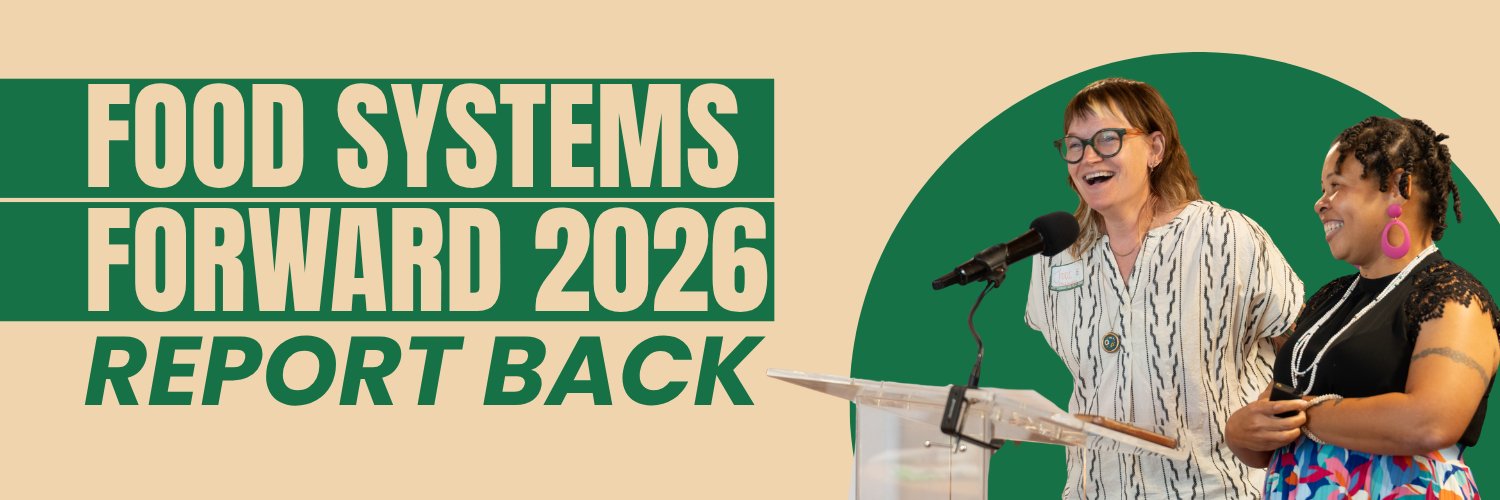
In June of 2026, the Pittsburgh Food Policy Council brought together community members, farmers, organizational leaders, businesses, and policymakers from across the region for our Food Systems Summit. This year's theme, Food Systems Forward, was a chance to look back at the progress made through the Greater Pittsburgh Food Action Plan and look ahead at what comes next.
Throughout the half-day summit, attendees reflected on shared wins, surfaced emerging priorities, and dug into the real barriers standing between our region and a more equitable food system. Everyone in the room had a stake in the conversation and it showed.
This report captures what we heard, how the room voted on what matters most right now, and what we identified as the barriers standing in the way.
How We Prioritized
The Greater Pittsburgh Food Action Plan includes dozens of recommendations for strengthening our regional food system. Rather than ask attendees to weigh in on all of them, we wanted to know which recommendations feel most urgent, right now, to the people doing this work?
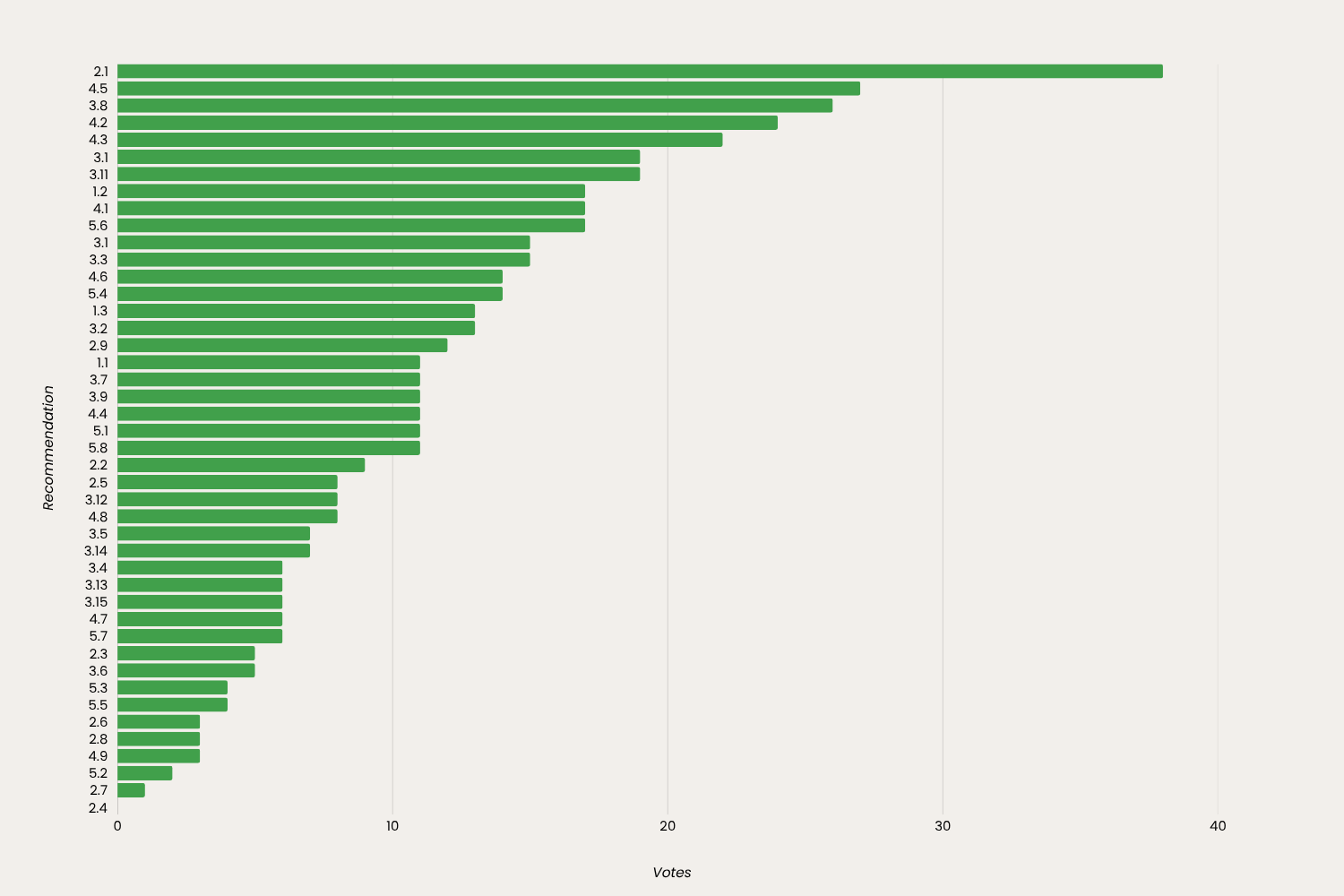
Each attendee received ten dots to distribute across the recommendations posted around the room. Participants could place more dots on the priorities that felt most pressing to them, and/or spread dots across multiple recommendations if several felt equally important. This gave us a real-time, crowd-sourced snapshot of regional priorities, straight from the people living and working in this food system every day.
The three recommendations with the most votes were:
- 2.1: Improve access to land and capital for farmers, including new and beginning farmers and farmers of color.
- 3.8: Increase connections between growers and buyers.
- 4.5: Advocate for strengthening and expanding the Supplemental Nutrition Assistance Program.
These became the focus of the next part of the summit, small-group breakout sessions to identify the barriers standing between us and progress on each one.
Voting Results
To reference all of the recommendations visit the GPFAP (PG 16)
What's Standing in the Way
After voting, attendees broke into small groups organized around the three top-priority recommendations. Each group worked through a barrier-capture exercise, naming the obstacles they see most clearly in their own corners of the food system. Three distinct, but deeply connected, pictures emerged.
2.1 Improve access to land and capital for farmers, including new and beginning farmers and farmers of color. Groups pointed to a tangle of financial and structural barriers including high land costs, limited access to credit, and a lack of equitable funding, grants, or micro-loans for new and beginning farmers. Additionally, the conversation often turned to history and the systemic racism, land apartheid, and redlining that have shaped who owns land in this region to this day. Groups also discussed confusing zoning and permitting processes, no centralized source of information, and a city that too often prioritizes “housing” over agriculture in land-use decisions instead of pairing the two as complementary priorities.
3.8 Increase connections between growers and buyers. Here, the barriers were about coordination and infrastructure. Buyers and restaurants struggle to find reliable small-scale local producers and local food often can't compete on price with imported goods that benefit from subsidies local farms don't have access to. Groups also flagged limited networking opportunities between growers and buyers, weak mid-chain coordination, and a local food system that's still competing against the scale and pricing power of corporate-owned farmland.
4.5 Advocate for strengthening and expanding the Supplemental Nutrition Assistance Program. The barriers here were less about the program's design and more about reach. Major takeaways included chronic misinformation about eligibility, confusion around changing guidelines, and SNAP office hours that don't match the realities of people's schedules. Stigma and concerns about fraud have also fed narratives that make expanding or strengthening the program politically harder, even where community need is clear.
What This Tells Us
Looking across all three groups, it is clear that the barrier is greater than a single broken policy. It is a lack of accessible information, compounded by systems that were never built with equity in mind. Farmers don't know what land is available, buyers don't know which producers exist, and eligible families don't know they qualify. Underneath all of this sits the deeper structural issue of decades of policy and disinvestment that have made land, capital, and support harder to reach for the people who need them most.
This tells us that closing information gaps alone won't be enough. Real progress means pairing better access to information with policy changes that address who currently holds power over land, capital, and food infrastructure in our region. That's the work the Pittsburgh Food Policy Council is committed to carrying forward, together with the partners, farmers, and community members who have been working alongside us for nearly a decade.
This work doesn't start from scratch. Every recommendation in the Greater Pittsburgh Food Action Plan already comes with strategies for moving the needle, a named set of key partners, and recommended next steps.
PFPC is currently in the middle of a full evaluation of that plan. We've reached out to the primary and contributing stakeholders behind many GPFAP strategies to hear directly where progress has been made. Next, we'll be following up with the City and County on the strategies where they were named, to understand what's moved and what hasn't.
Of the plan's full set of recommendations, PFPC committed as backbone organization to 9 priority strategies, and we've largely achieved what we set out to do. That's real progress, built over nearly a decade of work with partners across the region. It also means we're at a turning point. This midpoint evaluation is how we identify what's next, the new set of priorities that will guide PFPC and our partners' work through 2030, informed by input from rooms like the one at this summit. In other words, the barriers named at this summit are a direct input into a plan already in motion, helping us sharpen where PFPC and our partners focus for the next four to five years.
Thank you to everyone who joined us for Food Systems Forward. We know the barriers named at this summit aren't new. We know they won't be solved by any one organization, policy, or funding stream alone but naming them clearly, together, is how progress continues. This room full of farmers, advocates, policymakers, businesses, and neighbors proved that the will to do this work is here.
